March’s Opening Volatility: A Tale of Two Global Masterlines
March 2026 starts with a geopolitical Black Swan. As Middle East tensions drive oil to $100 and NFP data nears, learn how to navigate the Volatility between Fed policy shifts and Apple’s AI democratization.

How can investors hedge against a "Black Swan" geopolitical event while tracking a softening U.S. labor market? As we enter the first week of March 2026, the global financial landscape is being reshaped by a dramatic military escalation in the Middle East and critical domestic policy shifts in Washington.
The calm of the early year has been shattered. Investors are now forced to navigate a high-stakes environment where traditional economic data must compete with the raw volatility of geopolitical conflict for market dominance.
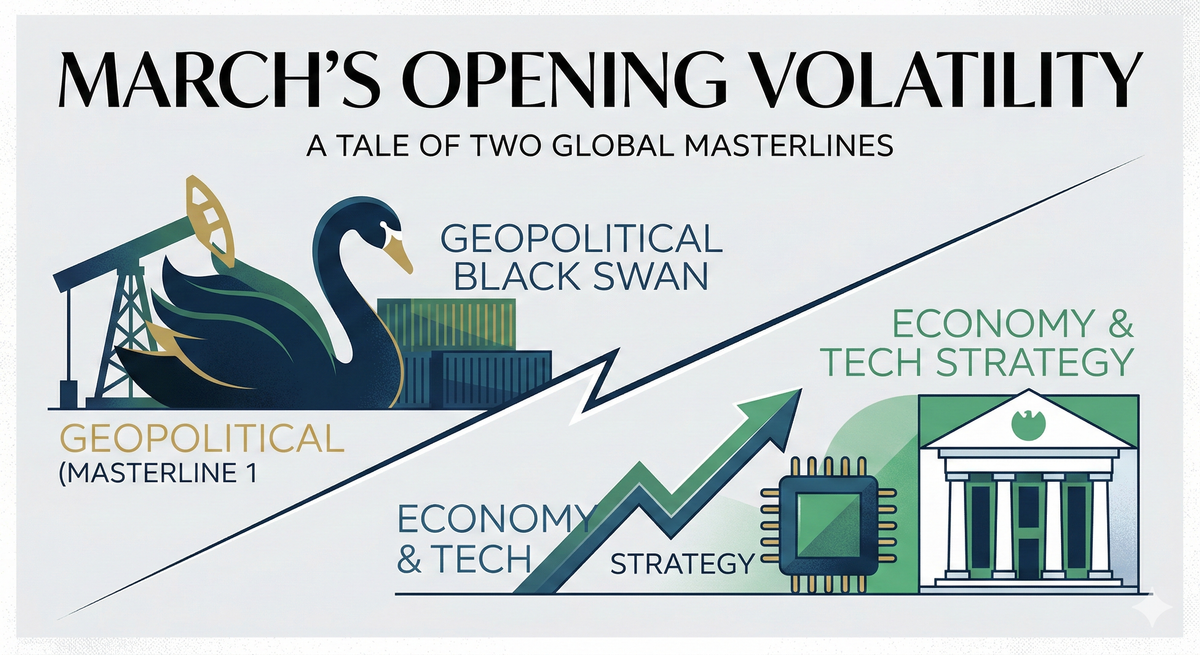
Masterline 1: The Geopolitical Black Swan
The weekend's joint U.S.-Israeli military strike on Iran has fundamentally altered the risk-premium model for global assets. With the confirmed death of Iran’s Supreme Leader Ali Khamenei and dozens of high-ranking officials, the "limited strike" framework has been discarded.
- Energy & Shipping on Edge: Brent crude oil prices surged by 8–10% in off-hours trading, nearing the psychologically critical $100 mark. Major shipping lines, including Maersk, have already begun rerouting vessels around the Cape of Good Hope as the Strait of Hormuz faces a de facto blockade.
- The Crypto V-Recovery: Interestingly, Bitcoin served as the only 24/7 liquidity window during the peak of the crisis. After an initial plunge to $63,000, BTC staged a massive V-shaped recovery, suggesting that crypto-native capital is increasingly pricing these conflicts as "contained" or seeking refuge in decentralized assets.
- Regional Fallout: While Western markets remained closed over the weekend, Gulf equity markets suffered heavy losses, with the Iranian stock market suspending trade entirely to curb panic selling.
Masterline 2: The Fed’s Leadership Vacuum and Economic Cool-down
While the world watches the Middle East, a structural crisis is brewing within the Federal Reserve. Current Chair Jerome Powell’s term expires in just 11 weeks, yet the confirmation of his successor remains paralyzed in the Senate.
- Political Deadlock: Legislative hurdles have stalled the confirmation of the next Fed leadership, creating a "policy fog" at a time when the market desperately needs clarity on the next easing cycle.
- The Non-Farm Payroll (NFP) Criticality: This Friday’s jobs report is expected to show a sharp deceleration, with forecasts hovering around 60,000 new jobs—a significant drop from January’s 130,000. If the data confirms a softening labor market, it will put immense pressure on a "leaderless" Fed to accelerate rate cuts despite the inflationary threat posed by rising oil prices.
Tech Strategy: From Premium to Proliferation
Amidst the macro chaos, the technology sector is pivoting. Apple’s spring announcements signal a "democratization of AI." By positioning the iPhone 17 and new entry-level MacBook models as high-performance, low-cost gateways to "Apple Intelligence," the tech giant is shifting its growth logic from luxury margins to ecosystem scale.
Furthermore, Broadcom’s (AVGO) upcoming earnings will be the ultimate litmus test for the AI trade. Analysts are looking for confirmation that AI infrastructure demand can offset the margin pressures of hardware manufacturing.
The Bottom Line for Investors
The first week of March is not a time for passive holding. The interplay between supply-chain shocks (oil/shipping) and disinflationary signals (NFP/Tech pricing) suggests a period of extreme "bifurcation."
Whether the market achieves a "soft landing" or enters a period of "stagflationary" pressure depends entirely on whether the Middle East conflict remains contained and if the Fed can maintain its independence amidst a turbulent transition of power.
Disclaimer: This article is for informational purposes only and does not constitute financial, investment, or legal advice. The views expressed are based on current market data and geopolitical events as of March 2026. Investing in financial markets, including equities and digital assets, involves significant risk. Always conduct your own research or consult with a professional advisor before making any investment decisions.