
The Fed Didn’t Cut Rates. It Changed the Rules of the Game
Kevin Warsh’s first FOMC meeting as Fed Chair was not just about keeping rates unchanged. It marked the beginning of a new Fed communication regime: less forward guidance, weaker dot-plot anchoring, a firmer 2% inflation commitment, and a more volatile macro environment for risk assets.

Excerpt:
Kevin Warsh’s first FOMC meeting as Fed Chair was not just about keeping rates unchanged. It marked the beginning of a new Fed communication regime: less forward guidance, weaker dot-plot anchoring, a firmer 2% inflation commitment, and a more volatile macro environment for risk assets.
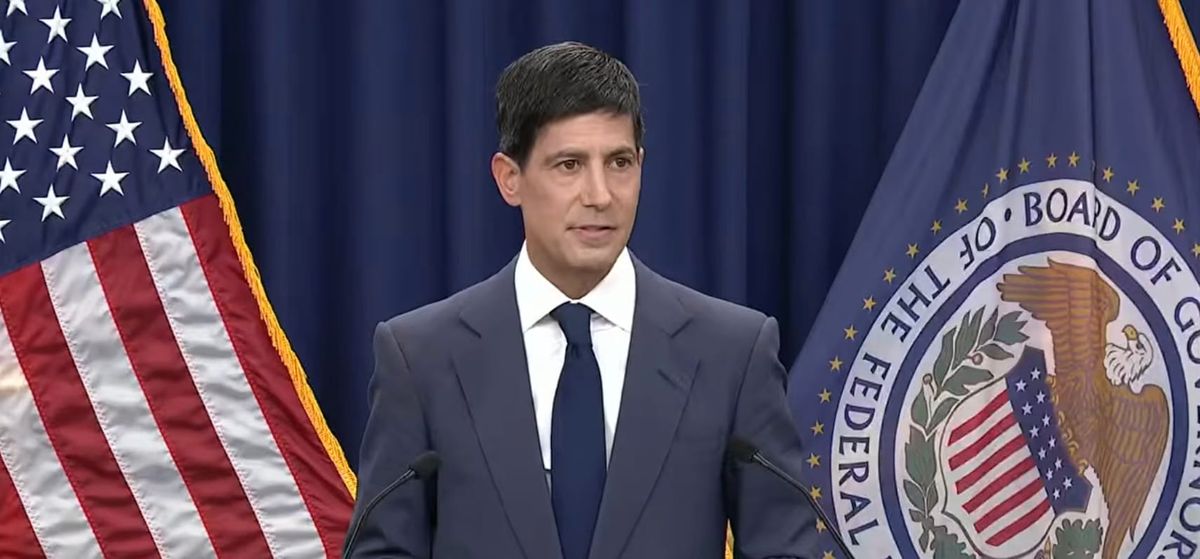
On June 17, Kevin Warsh chaired his first FOMC meeting as Federal Reserve Chair.
The rate decision itself was not the surprise.
The Federal Open Market Committee kept the target range for the federal funds rate unchanged at 3.50%–3.75%, in line with broad market expectations. The vote was unanimous.
But markets were not shocked by the rate decision.
They were shocked by the change in the Fed’s operating style.
Warsh used his first meeting not to deliver an immediate policy pivot, but to reset how the Federal Reserve communicates with markets. The statement was dramatically shorter. Forward guidance was removed. Warsh declined to submit his own rate projection. And instead of giving investors a clear roadmap for the next move, he announced five independent task forces to review core parts of the Fed’s policy framework.
This was not a normal FOMC meeting.
This was a communication shock.
And potentially, the start of a new Fed regime.
1. The Rate Decision Was Boring. Everything Else Was Not.
The Fed’s decision to hold rates steady was widely expected.
The statement said economic activity continues to expand at a solid pace, job gains have kept pace with the workforce, unemployment has changed little, and inflation remains elevated relative to the Fed’s 2% goal.
The final line was short but powerful:
The Committee will deliver price stability.
That sentence matters.
It tells the market that Warsh’s Fed is not ready to validate a rate-cut narrative while inflation is still above target. Even though the Fed did not hike, the statement made clear that the 2% inflation target remains the red line.
In the new Summary of Economic Projections, the Fed also presented a more difficult macro mix:
- 2026 real GDP growth was revised to 2.2%
- 2026 PCE inflation was revised to 3.6%
- 2026 core PCE inflation was revised to 3.3%
- The 2026 year-end federal funds rate median rose to 3.8%
That is not a clean soft-landing message.
It is a “higher inflation, slower growth, higher-for-longer rates” message.
The market came into the meeting looking for the next rate signal.
Warsh delivered something bigger: a new communication framework.
2. Warsh Is Trying to End the Era of Fed Handholding
For years, markets were trained to parse every Fed sentence for clues.
One word added to the statement could move Treasury yields. One phrase removed from the press conference could change rate-cut expectations. One dot in the SEP could trigger a broad repricing across stocks, bonds, currencies, gold, and crypto.
That was the Powell-era market structure:
The Fed talked.
Markets parsed.
Financial conditions adjusted before the next policy move.
Warsh appears to be challenging that model.
In his opening statement, he said the new policy statement was shorter and simpler because it was meant to “give the facts.” He also said forward guidance was not well-suited to the current policy environment.
That is a major shift.
The Fed is no longer trying to spoon-feed markets a future rate path.
Instead, Warsh is telling investors to watch the data and price the risk themselves.
In theory, this is a cleaner central-banking philosophy. Central banks should not over-promise. They should not let markets treat every projection as a contract. They should not create the illusion that the future policy path is pre-written.
But in practice, this transition is uncomfortable.
Markets do not only care about the level of interest rates.
They care about the visibility of the policy reaction function.
And after this meeting, that reaction function became harder to read.
3. The Dot Plot Became Less Useful
One of the most important signals from the meeting was Warsh’s refusal to submit his own SEP rate projection.
The dot plot has always been imperfect. It is not a promise. It is not a committee decision. It is only a collection of individual estimates.
But markets still use it as an anchor.
Warsh appears to be weakening that anchor.
His message was effectively:
Do not treat the dots as guidance.
Do not treat the statement as a roadmap.
Do not expect the Fed to manage your expectations every six weeks.
This changes how investors should read Fed communication.
Under Powell, the dot plot was not official guidance, but it still carried heavy signaling value.
Under Warsh, the dot plot may become more of an internal temperature check than a market roadmap.
That means the market will have to rely more heavily on incoming data, less on Fed-provided signals.
This is why the June 17 meeting should not be described simply as “hawkish.”
It was more structural than that.
Warsh did not just push back against rate cuts.
He pushed back against the market’s dependence on Fed guidance.
4. Less Guidance Means More Volatility
There is a big difference between two statements:
“We will not tell you our next move.”
And:
“We will not clearly tell you how we are thinking about the tradeoff.”
The first is reasonable.
The second is more disruptive.
Markets can handle uncertainty about the next rate decision. They deal with that every cycle.
What markets struggle with is uncertainty about the Fed’s reaction function.
If investors do not know how the Fed will respond to sticky inflation, rising unemployment, stronger productivity, higher oil prices, or looser financial conditions, then every macro data point becomes more powerful.
A hot inflation print can quickly reprice rate-hike odds.
A weak jobs report can quickly revive rate-cut expectations.
A spike in oil prices can hit both inflation expectations and growth expectations.
A strong equity rally can make financial conditions look too loose.
In other words, less Fed guidance does not remove uncertainty.
It transfers uncertainty from the Fed’s words into market prices.
That usually means higher volatility.
5. The Five Task Forces Are Not Just Bureaucratic Details
Warsh also announced five independent task forces covering:
- Fed communications
- Balance sheet policy
- Use and reliance on economic data
- Productivity and jobs in an era of technological transformation
- Inflation frameworks
At first glance, this sounds procedural.
It is not.
This is Warsh’s attempt to review the Fed’s operating system from the ground up.
The communications task force could reshape how the Fed uses statements, press conferences, minutes, speeches, and the SEP.
The balance sheet task force could influence the future of the ample-reserves regime and the composition of the Fed’s assets.
The data task force could affect how the Fed integrates real-time data, high-frequency signals, and traditional economic statistics.
The productivity and jobs task force is especially important in an AI-driven economy, where the relationship between growth, labor markets, wages, and inflation may be changing.
The inflation framework task force suggests Warsh wants to reassess how the Fed understands and responds to inflation shocks, while still keeping the 2% target intact.
This is bigger than one meeting.
Warsh is not only asking whether rates should be 25 basis points higher or lower.
He is asking how monetary policy should be conducted in a world of sticky inflation, high fiscal deficits, geopolitical shocks, AI-driven productivity uncertainty, and markets that have become deeply dependent on central-bank signals.
6. The Fed Put Just Became Less Explicit
For risk assets, the most important takeaway is simple:
The Fed put just became less explicit.
This does not mean the Fed will ignore a recession.
It does not mean the Fed will ignore a financial crisis.
But it does mean Warsh appears less interested in protecting markets from uncertainty itself.
That matters.
The Powell Fed often tried to reduce market confusion. The Warsh Fed appears more willing to let markets live with it.
For investors, this means the macro environment is likely to become more data-driven and more volatile.
The next CPI print matters more.
The next jobs report matters more.
Energy prices matter more.
Two-year Treasury yields matter more.
September and December rate-hike probabilities matter more.
When the Fed gives fewer signals, the market has to assign more weight to each incoming data point.
That creates sharper moves in both directions.
7. What This Means for Stocks
For equities, the biggest risk is not simply that the Fed may hike again.
The bigger risk is that the discount-rate environment becomes less predictable.
High-multiple equities are especially sensitive to this.
When investors feel confident about the direction of rates, they are more willing to pay up for long-duration cash flows.
When rate uncertainty rises, valuation multiples become more fragile.
This matters most for:
- High-growth technology stocks
- AI-related names with elevated expectations
- Small caps
- Housing-related equities
- Consumer discretionary stocks
- Other rate-sensitive sectors
The market can still rally in this environment, especially if growth remains resilient and earnings hold up.
But the bar is higher.
Stocks now need to absorb a Fed that is less willing to provide a clear policy path.
That makes every inflation and labor-market data release more important for equity valuation.
8. What This Means for Bonds
The front end of the Treasury curve becomes the main battleground.
The 2-year yield reflects expectations for Fed policy over the near term. If the Fed is giving less guidance, the 2-year yield has to do more of the work.
If inflation remains sticky, the front end can quickly price higher odds of additional hikes.
If labor data weakens, the front end can quickly price future cuts.
But without clear Fed communication, those moves can become more abrupt.
The long end is more complicated.
Long-term yields will reflect not only Fed policy expectations, but also inflation risk, fiscal deficits, term premium, and global demand for U.S. duration.
If Warsh’s Fed strengthens inflation credibility, long-term inflation expectations could remain anchored.
But if markets interpret the new communication style as opacity rather than discipline, term premium could rise.
That is the key tension for bonds:
Less guidance can either build credibility or raise uncertainty.
The difference will depend on execution.
9. What This Means for Crypto
Crypto is directly exposed to this regime shift.
Bitcoin, Ethereum, and high-beta crypto assets do not trade only on adoption, ETF flows, token cycles, or on-chain activity.
They also trade on liquidity, real yields, the dollar, and risk appetite.
A Fed that gives less guidance can create sharper swings in all of those variables.
If real yields rise and the dollar strengthens, crypto can face pressure.
If growth weakens and markets start pricing future easing, crypto can rebound quickly.
If inflation stays sticky while the Fed refuses to guide markets clearly, volatility can rise across both traditional and crypto markets.
This does not mean the direction for crypto is automatically bearish.
It means the macro regime is less forgiving.
The biggest crypto moves may increasingly come around CPI, payrolls, oil shocks, Fed speeches, and changes in rate-hike or rate-cut probabilities.
In a world with less forward guidance, crypto traders need to watch macro data more closely.
10. What This Means for Gold
Gold has a mixed setup.
On one hand, gold tends to benefit from policy uncertainty, geopolitical stress, and questions around central-bank credibility.
On the other hand, gold can struggle when real yields rise.
Warsh’s new Fed framework creates both forces at once.
If the market believes Warsh is serious about restoring inflation credibility, real yields may stay firm, which can cap gold upside.
But if the market sees the new communication style as increasing uncertainty, gold can benefit from stronger demand for macro hedges.
The direction will depend on which force dominates:
Higher real yields, or higher uncertainty.
For now, gold is likely to remain highly sensitive to inflation data, energy prices, the dollar, and real-rate expectations.
11. The Bigger Picture: Data Over Dots
The June 17 FOMC meeting was not just about policy.
It was about control.
For years, the Fed controlled the market narrative by giving investors a steady stream of guidance.
Warsh is trying to take some of that control back.
Instead of allowing markets to treat every Fed communication as a policy promise, he is making the Fed less predictable by design.
That may be healthier over the long run.
Markets should not be overly dependent on central-bank language.
But the adjustment period will be difficult.
Investors were trained for a Fed that explains the path before taking it.
Warsh is telling them:
Watch the data.
Price the risk yourself.
Stop expecting the Fed to remove uncertainty for you.
This is why the market reaction was so sharp.
The Fed did not just hold rates steady.
It changed the rules of the game.
Bottom Line
The June 17 FOMC meeting marked the beginning of the Warsh Fed.
The key message was not:
No rate cut.
The key message was:
No more easy guidance.
Warsh kept rates unchanged, reaffirmed the 2% inflation target, weakened forward guidance, declined to submit his own SEP projection, and launched a broader review of how the Fed communicates and conducts monetary policy.
For markets, this means a new regime:
- Less forward guidance
- Less dot-plot comfort
- More data dependence
- More uncertainty around the Fed’s reaction function
- Higher sensitivity to inflation and labor-market data
- Higher macro volatility across stocks, bonds, gold, the dollar, and crypto
The new Fed era has started.
Data over dots.
Inflation credibility over market comfort.
Less guidance, higher volatility.