Navigating Volatility: A Comprehensive Analysis of Coinbase’s Q4 2025 Performance
A deep dive into the "Triple Threat" currently facing Coinbase ($COIN). From a statistical 348.78% EPS negative surprise to systemic platform outages and massive $550M insider selling, we analyze why the "Coinbase Premium" is undergoing a fundamental recalibration within the current macro cycle.

In the complex landscape of digital asset infrastructure, Coinbase ($COIN) has long commanded a "Premium" based on its reputation for regulatory compliance and operational stability. However, the market events of February 12, 2026, have prompted a fundamental re-evaluation of this valuation.
The following analysis examines the confluence of a significant earnings miss, platform performance during peak volatility, and executive governance signals within the context of the current macro cycle.
1. Financial Performance: Quantifying the Q4 Deviation
Institutional valuation models rely on earnings predictability. The Q4 2025 results, however, displayed a statistical variance that warrants deep scrutiny.
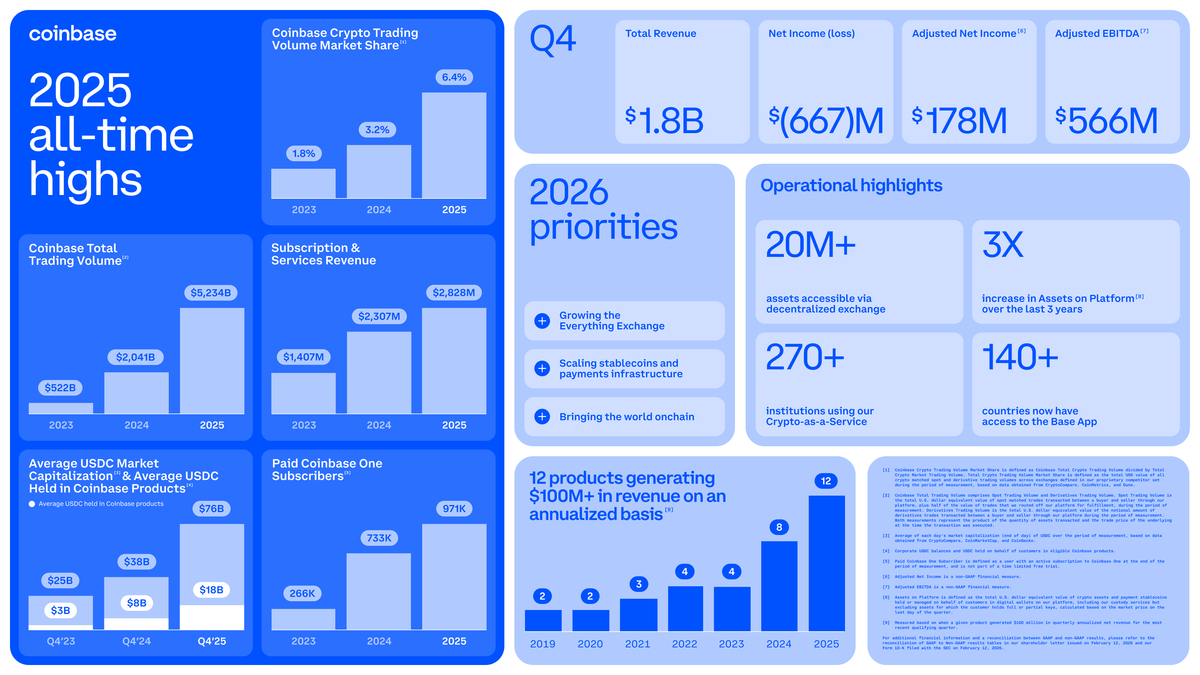
- EPS Performance: Coinbase reported an EPS of -$2.49, diverging significantly from the analyst consensus of $1.001.
- The Surprise Factor: This represents a 348.78% negative surprise, an outlier in the company's recent reporting history.
- Net Income Impact: The quarterly net loss reached $667 million, ending an eight-quarter streak of profitability.
- Revenue Metrics: Quarterly revenue stood at $1.78 billion, failing to meet the $1.81B - $1.83B street expectations.
2. Operational Reliability: Execution During Market Stress
For a Tier-1 financial institution, the ability to provide consistent market access is a core metric of operational health. On February 12, this access was compromised during a critical period of price discovery.
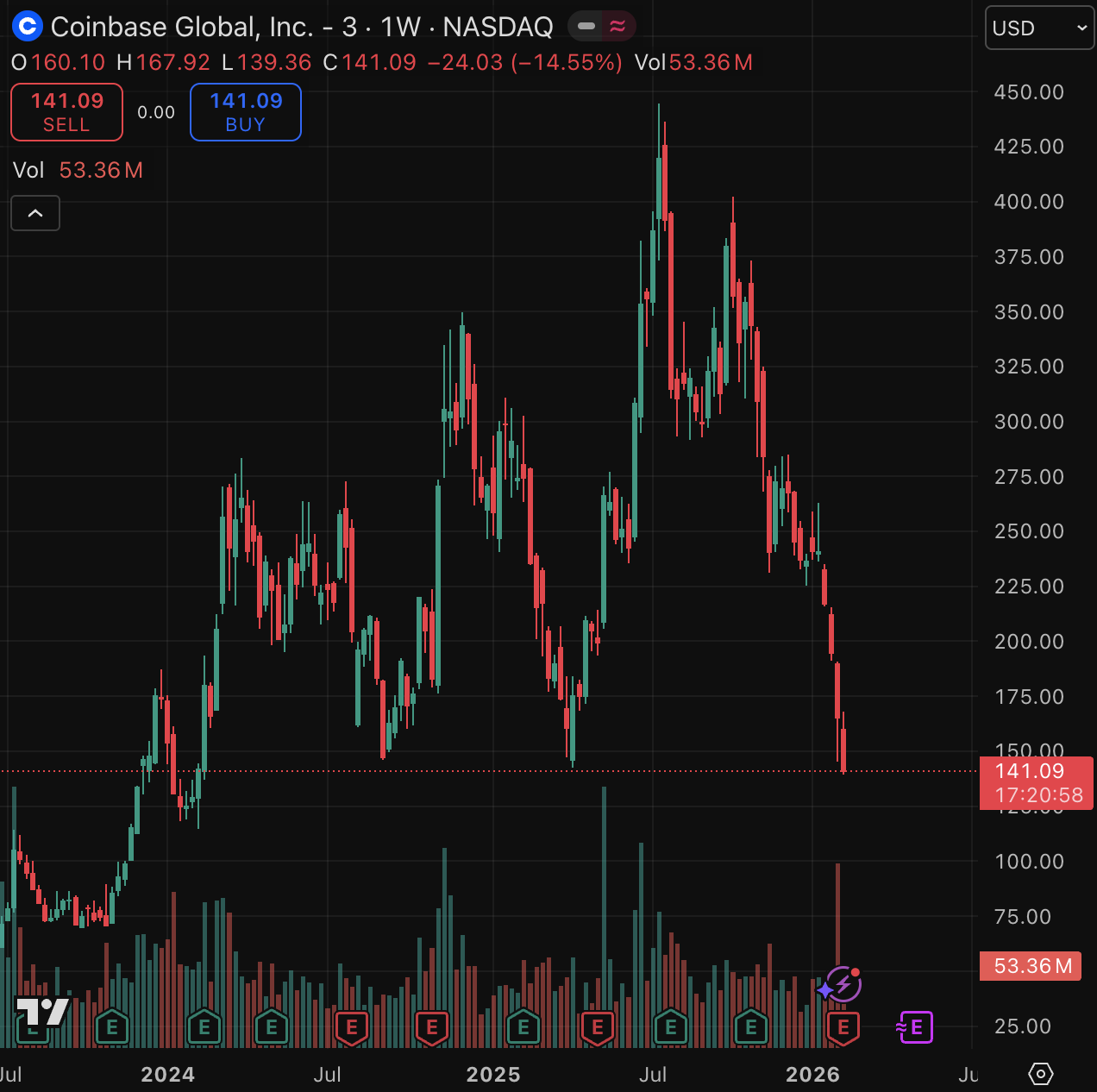
Coinbase confirmed that users encountered significant friction, being unable to buy, sell, or transfer crypto at various points throughout the day. While the company maintains that "funds are safe," the inability for participants to manage risk during a 70% drawdown from 2025 highs represents a significant operational hurdle for institutional and retail trust alike.
3. Governance Signals: Executive Liquidity and Market Timing
Governance observers often look to executive transactions as a proxy for internal sentiment, especially when those transactions coincide with periods of high corporate stress.
Reports from @cryptorover indicate that CEO Brian Armstrong liquidated over 1.5 million shares, with a market value of approximately $550 million. While executive sales are often pre-planned under Rule 10b5-1, the optics of such a significant liquidity event occurring as the platform faced operational outages and reported a $667 million loss have become a focal point for market commentary.
4. Macro Context: Comparing Cycle 4 to Historical Precedents
To determine if Coinbase’s current struggles are idiosyncratic or cyclical, we must look at the broader Bitcoin market cycle. The data suggests we remain in an early stage of the current correction.
| Metric | Historical Bottoms (Avg) | Current Cycle (Feb 2026) |
| Drawdown % | -77% to -86% | -46.9% ($67,000) |
| Duration | 12 to 14 Months | 4 Months (122 Days) |
The "Time Gap" is particularly notable. Historical capitulation phases suggest that the market has only completed roughly one-third of the expected duration of a typical cyclical bottom. As long as Coinbase remains a high-beta proxy for Bitcoin, its performance will likely remain tethered to this macro timeline.
Conclusion: Assessing the Path Forward
The "Coinbase Premium" has historically been built on the foundation of being the industry’s most reliable gatekeeper. Moving forward, the company faces the dual challenge of stabilizing its financial performance after a 348.78% EPS miss and restoring confidence in its operational infrastructure. For stakeholders, the primary question is whether the current 70% price correction reflects a temporary setback or a permanent recalibration of the company’s market standing.