The Anti-Human Interface: Why Crypto Was Actually Built for AI
Is the "unfriendliness" of Web3 actually a feature designed for a non-human species? Explore why the future of the blockchain economy belongs to AI agents, not humans.

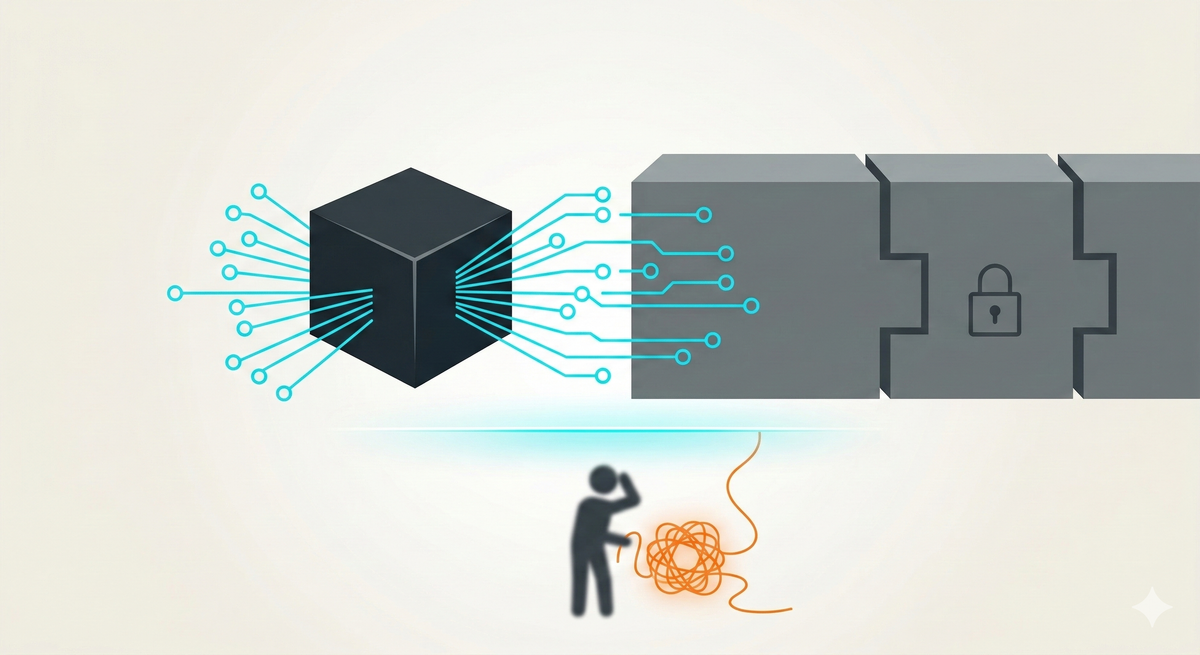
Is the "unfriendliness" of Web3 a bug, or a feature designed for a non-human species?
For years, the clunky user experience of blockchain technology has been dismissed as "early-stage growing pains." We’ve complained about hexadecimal addresses, the irreversible nature of transactions, and the terrifying complexity of smart contracts. But a shift in perspective suggests we’ve been looking at it all wrong.
The prevailing thesis now emerging among top-tier venture capitalists and protocol architects is that Bitcoin, Ethereum, and DeFi primitives weren't actually designed for humans. They are the perfect native environment for AI agents.
1. The "Anti-Human" Design as a Perfect API
To a human, a 42-character wallet address is a nightmare of potential errors. To an AI, it’s a precise, machine-readable identifier.
Traditional finance relies on "soft" systems: legal contracts, human mediation, and state enforcement. Crypto, however, is a "hard" system built on deterministic code and cryptographic proof. Humans crave flexibility and fear the "black hole" of a lost private key. AI, conversely, thrives in this environment. It doesn't get tired, it doesn't suffer from "fat finger" syndrome, and it can verify a smart contract's logic and execute trades in microseconds—speeds that are biologically impossible for a person.
2. The Rise of the Machine Economy
Current data points toward an inevitable shift from a human-centric on-chain economy to a machine-led one:
- The Scale of Agents: While the global human population is limited to a few billion, the digital landscape allows for the creation of hundreds of billions of AI agents—each requiring its own financial rails to perform tasks, pay for API calls, and settle debts autonomously.
- Autonomous Standards: New primitive standards are emerging that allow AI agents to negotiate and pay each other without human intervention. This is giving rise to a "Machine Economy" where bots settle micro-transactions for everything from data processing to decentralized storage.
- Capital Efficiency: A massive percentage of new venture capital is flowing toward the intersection of AI and Crypto. The industry is beginning to realize that AI can manage assets and optimize yield with a level of precision that eliminates the "human error" tax.
3. Case Studies: When Code Meets Autonomy
We are moving past theory into execution. Decentralized machine learning platforms are already demonstrating that AI can manage complex supply chains and liquidity pools more efficiently than any human committee.
Consider the emergence of AI-driven DAOs. These entities use neural networks to drive investment decisions, outperforming traditional funds by rebalancing portfolios in real-time based on live on-chain data. Even the physical infrastructure of the industry is pivoting; major mining operations are increasingly transforming into high-performance computing centers to supply the raw power needed for these autonomous agents.
4. The Path Forward: Two Parallel Tracks
Does this mean humans are obsolete in the world of decentralized finance? Not necessarily. The future points toward a bifurcated ecosystem:
- The Compliant Human Track: Regulated, UI-friendly, and protected by traditional safeguards and institutional oversight.
- The Permissionless AI Track: A high-speed, code-only environment where autonomous agents interact with raw protocols at the speed of light, governed solely by the laws of mathematics.
Final Thoughts
The "clunkiness" of crypto isn't a failure; it’s a filter. It is an interface designed for entities that speak the language of math rather than the language of law. The real challenge for developers today isn't just "How do we make crypto easier for people?" but "How do we build the best infrastructure for the billions of AI agents entering the market?"
The blockchain wasn't built to be a better bank for humans. It was built to be the first financial system for a new species of intelligence.