The Hormuz Hedge: Navigating Cross-Asset Volatility in a Post-Strike Market
Israel-Iran strikes have put the Strait of Hormuz in focus. With 20% of global oil at risk, a blockade could push crude to $150, sparking an inflation shock. We analyze the PAXG spike and BTC’s $65K recovery, exploring how to hedge geopolitical tail risks across Equity and Crypto markets.

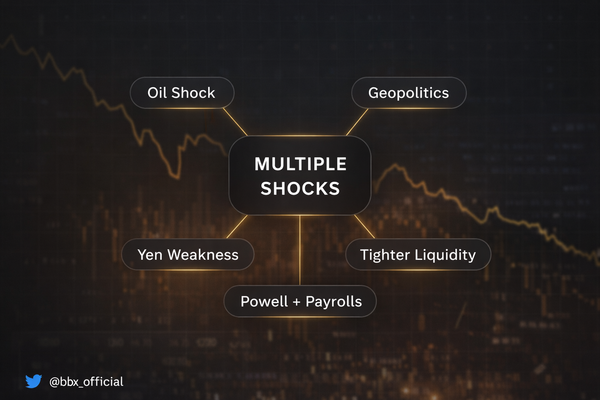
How to protect portfolios from Middle East geopolitical shocks? As Israel-Iran tensions escalate, the "Strait of Hormuz" tail risk has become the primary macro driver. Bloomberg Economics suggests a total blockade could propel Brent crude toward $150/bbl, triggering a global inflation spike that necessitates a unified strategy across Gold (PAXG), US Equities, and Bitcoin.
The Anatomy of a Risk-Off Event
The recent strikes in Iran triggered a classic "flight to safety" sequence. However, the market’s resilience suggests a sophisticated evolution in how "Digital Gold" interacts with traditional safe havens.
1. The Immediate Reaction: PAXG vs. BTC
Historically, geopolitical shocks favor physical assets.
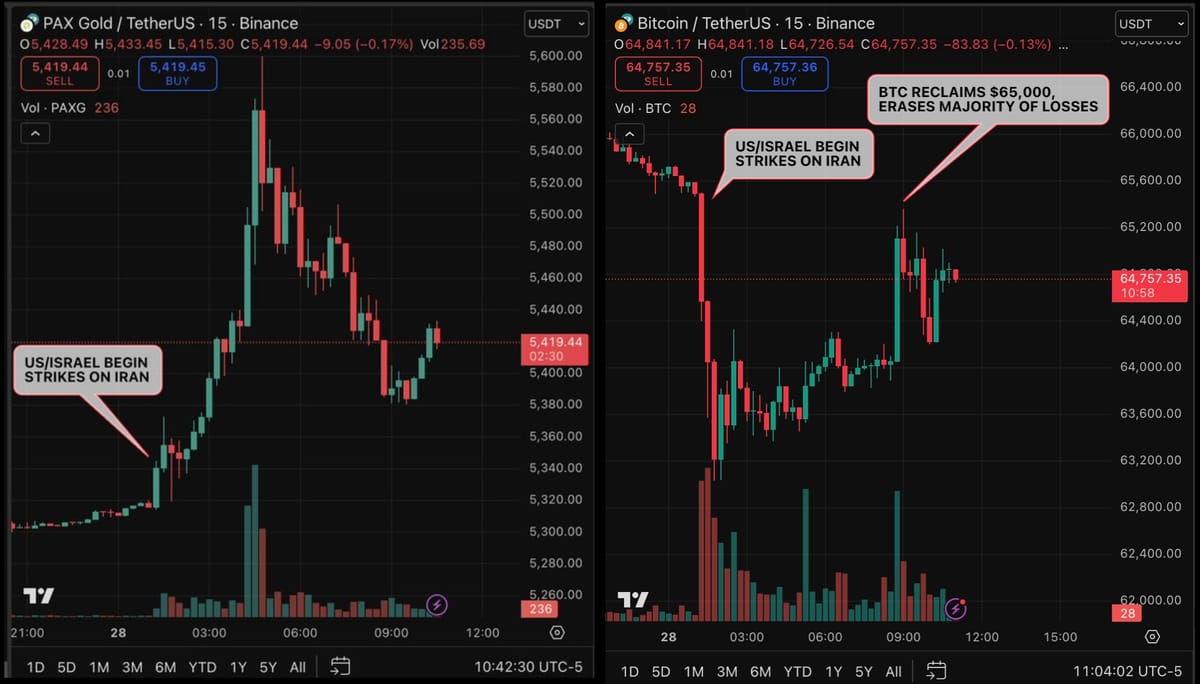
- PAXG (Gold): Experienced an immediate 4–6% premium spike as on-chain liquidity rushed for a safe-haven bid.
- Bitcoin (BTC): Initially dipped toward the $63,000–$65,000 support level before a sharp V-shaped recovery. This "reclaim" reinforces BTC’s status as an alternative liquidity hedge rather than a pure "risk-on" asset.
2. The Real Tail Risk: The Strait of Hormuz
While air strikes dominate the headlines, the true economic threat lies in the Strait of Hormuz—the world’s most important oil transit chokepoint.
- Supply Impact: Roughly 20% of global petroleum flows through this narrow passage.
- The Inflation Feedback Loop: If Iran attempts a blockade, oil is projected to rip past the $108 resistance level, targeting $130–$150 in extreme scenarios.
- The "Higher for Longer" Trap: Sustained oil prices at $100+ act as an "energy tax" on the global economy, reigniting CPI inflation and forcing central banks to maintain restrictive interest rates.
Cross-Asset Correlations: A Data-Driven Outlook
Traders are no longer looking at crypto in a vacuum. The correlation between energy prices, US Treasury yields, and BTC has tightened.
| Asset | 2026 Scenario (Blockade) | Correlation Type |
| Crude Oil (WTI) | Bullish ($120+) | Primary Trigger |
| Gold (PAXG/XAU) | Bullish | Defensive Hedge |
| US Equities (S&P 500) | Bearish (Valuation Squeeze) | Risk Sensitivity |
| Bitcoin (BTC) | Volatile (Bullish Long-term) | Liquidity Proxy |
The "Inflation Shock" Strategy
In the event of a sustained oil spike, traditional equity valuations face a "double whammy": increased operational costs and higher discount rates. Investors must look toward Equity + Crypto hybrid strategies to survive.
The goal is no longer just "buying the dip" in crypto; it is managing the exposure between Top-tier Equities (Energy/Defense) and Blue-chip Crypto as the macro regime shifts from growth-focused to inflation-defensive.
Conclusion: Watch the Oil Volatility Index
The macro trigger from here is not the rhetoric—it is the oil tape. If Brent crude holds above $95, expect a sustained rotation into commodity-backed tokens and hard assets. In a world where geopolitical borders are tightening, liquidity remains the only true exit strategy.