
The ‘Most Hated’ Rally: Why S&P 7,000 is a Minefield of Political Chaos and Mechanical FOMO
The S&P 500 hit 7,000, but is it a trap? Fueled by mechanical FOMO and the SEC's PDT rule removal, the market faces a "de-risking" event. With the Fed leadership crisis peaking on May 15 and inflation returning, here is why the "most hated rally" is a minefield for investors.

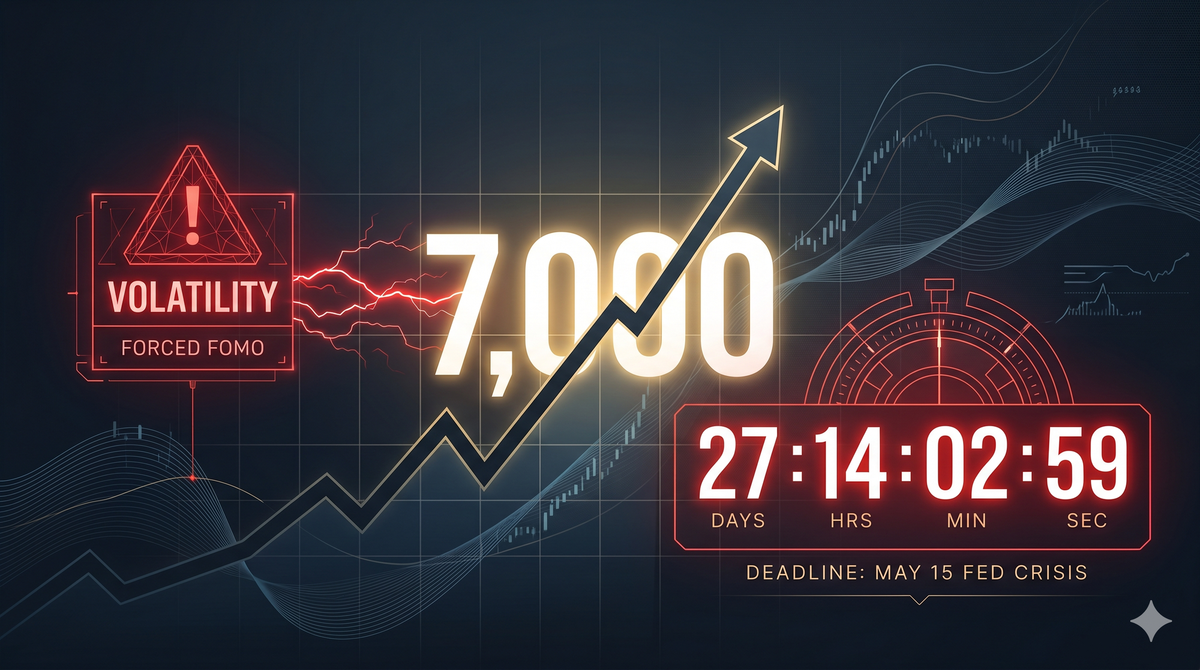
How to hedge against S&P 7,000 volatility? As the index hits record highs driven by systematic buying and the repeal of the PDT rule, investors face a "forced FOMO" trap. With the Fed leadership crisis looming on May 15, smart money is shifting toward decentralized alternatives and real-world assets.
A Rally Built on ‘Auto-Pilot’
Despite the record highs, the internal structure of this bull market is surprisingly brittle. Data shows that the primary engine isn't long-only investors; it’s Commodity Trading Advisors (CTAs) and systematic quant strategies. As the index breached key resistance levels, these algorithms were forced to buy, creating a feedback loop of "forced FOMO."
Meanwhile, retail investors are hitting the "exit" button, recording the largest capital outflows of the year last week, particularly in semiconductors. Goldman Sachs has issued a stark warning: the market is overextended, and a "de-risking" event is overdue.
The SEC’s Double-Edged Sword
In a move that could fundamentally alter market microstructure, the SEC has officially scrapped the long-standing Pattern Day Trader (PDT) rule. By removing the $25,000 minimum equity requirement, the "Democratization of Trading" has entered a new chapter.
While celebrated as a win for retail, the timing is precarious. In a market dominated by institutional algorithms, lowering the barrier to entry might simply provide more "liquidity" for the machines to absorb during the next bout of irrational volatility.
The May 15th Sword of Damocles
Federal Reserve Chair Jerome Powell’s term expires on May 15, and the confirmation of his successor, Kevin Warsh, is trapped in legislative gridlock. With the threat of a constitutional crisis regarding Fed independence, the premium for U.S. assets could evaporate overnight. At S&P 7,000, there is zero margin for error.
The Return of the Inflation Ghost
Supply chains are screaming again. The Strait of Hormuz conflict has triggered an "Event Horizon" in commodities:
- Aluminum: Global inventories are down to just one week of consumption.
- Fertilizer: Urea prices have spiked 50%, creating a cost-push inflationary spiral.
The "Trump Trade" of tax cuts is facing its greatest adversary: the reality of a shrinking wallet as energy and food costs soar.
The Bottom Line
The road to S&P 7,000 was paved with geopolitical landmines. As we approach the mid-May Fed deadline, investors should stop watching the scoreboard and start watching the exit. This isn't just a rally; it's a high-wire act over a volcano.
Disclaimer: This article is for informational purposes only and does not constitute financial, investment, or legal advice. Trading involves significant risk.