
The Trillion-Dollar Frontier: SpaceX's Mega-IPO, Tesla Merger Rumors, and Musk's Ultimate Masterplan
SpaceX is gearing up for a historic $1.75 trillion IPO. Dive into the underlying valuation logic, the truth behind Wall Street's underwriting frenzy, and the explosive market rumors of a 2027 mega-merger with Tesla.

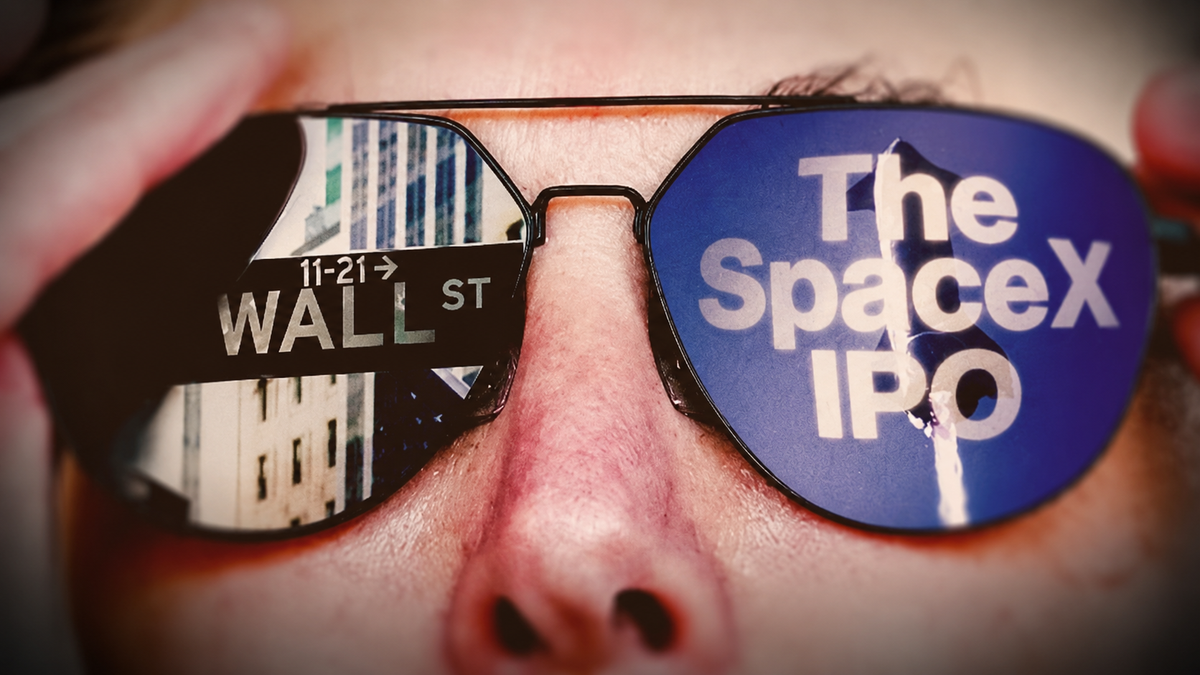
Welcome to another deep dive by BBX. Today, we are unpacking the most anticipated event in the tech and finance world: the upcoming SpaceX IPO, its underlying valuation logic, and the explosive rumors of a future mega-merger with Tesla.
SpaceX is gearing up for a historic IPO, and the numbers being thrown around are nothing short of staggering. With an initial target valuation anchored at a jaw-dropping $1.75 trillion, this isn't just another tech listing—it is the financial crystallization of the space economy, generative AI, and global new energy into one massive capital event.
Here is a detailed breakdown of what is happening behind the scenes, the financial realities of SpaceX, and why Wall Street is betting big on Elon Musk’s ultimate blueprint.
1. The IPO Mechanics: A "Bargain" for Wall Street?
Despite the astronomical figures, SpaceX has flexed its immense market power to squeeze Wall Street's underwriting fees to historic lows.
Traditionally, mega-IPOs carry underwriter fees ranging from 4% to 7%, rarely dropping below 1%. However, SpaceX has aggressively negotiated this down to under 0.75%, marking the lowest underwriting fee rate in the US since the government-backed General Motors IPO in 2010.
Yet, Wall Street banks are still fighting tooth and nail for a seat at the table. Why? Because on a massive $75 billion fundraising target, even a 0.75% cut translates to over $560 million in gross underwriter revenue. Furthermore, securing a spot in this IPO guarantees these banks access to lucrative future derivative businesses, bond issuances, and private financing deals.
Of the $75 billion raised, approximately $62.8 billion will be used to cash out early founding teams, internal employees, and upstream suppliers, leaving a smaller portion to fuel the development of new projects like Starship.
2. Inside the Financials: The Cash Cow vs. The AI Black Hole
Looking at the fundamentals, SpaceX’s financial structure presents a fascinating duality: massive growth paired with massive capital expenditures.
In early 2026, single-quarter revenue hit $4.7 billion, but the net loss expanded to $4.2 billion. The core driver behind these losses isn't just rocket building—it is Artificial Intelligence. The massive capital burn is primarily attributed to over $20 billion invested in AI compute infrastructure following the integration with xAI. SpaceX is actively transitioning from a pure aerospace company to an AI infrastructure operator, evidenced by a massive $15 billion annual GPU leasing contract signed with Anthropic.
On the flip side, Starlink remains the undisputed "cash cow" of the group. Now operational in over 70 countries with a user base exceeding 6.8 million, along with a steady stream of military and B2B contracts, Starlink provides the foundational cash flow that makes the $1.75 trillion valuation palatable to capital markets.
3. The Valuation Logic: Buying the Future Monopoly
Why is the market willing to assign a $1.75 trillion valuation to a company currently operating at a heavy loss?
The answer lies in the concept of "Future Monopoly." Capital markets are not paying for today’s balance sheet; they are pricing in a future where SpaceX monopolizes space data centers, Mars colonization, and global AI training infrastructure. Much like Amazon in the early internet era—which enjoyed high valuations despite chronic losses—investors are betting heavily on the industry's realization over the next decade.
4. The 2027 Tesla-SpaceX Merger: The Ultimate Blueprint
Adding fuel to the fire are strong market rumors—bolstered by recent Wall Street research—predicting a formal merger between Tesla and SpaceX by 2027.
If realized, the combined entity's valuation could soar to between $3.5 trillion and $3.6 trillion. This isn't just a financial maneuver; the operational synergies are already deeply embedded:
- Personnel & Leadership: Elon Musk serves as Chairman for both, with overlapping board members creating a deeply aligned decision-making core.
- Supply Chain & R&D: Tesla already manufactures specialized aerospace components for SpaceX, while xAI provides Tesla with hundreds of millions of dollars in autonomous driving compute services.
- The Ultimate Closed Loop: A merger would create an unprecedented ecosystem—from commercial space launches and global satellite internet to electric vehicles, energy storage, general artificial intelligence, and humanoid robots. Starlink provides blindspot-free global connectivity for Tesla's Full Self-Driving (FSD), while Tesla's energy storage powers orbital data centers.
5. Three Major Roadblocks to the Mega-Merger
While the narrative is compelling, merging two global behemoths is easier said than done. Three significant barriers stand in the way:
- Global Antitrust Scrutiny: Both companies hold near-monopoly market shares in their respective domains (commercial spaceflight, EV infrastructure, AI compute). Regulatory bodies in the US (FTC) and the EU will inevitably launch severe antitrust investigations, potentially demanding the spin-off of certain regional operations.
- Shareholder Dissonance: Tesla’s retail and index fund shareholders may push back, fearing that Tesla’s healthy cash flows will be continually cannibalized by SpaceX’s capital-intensive AI and aerospace ventures.
- Financial & Compliance Alignment: SpaceX is a private, loss-making entity with immense capital expenditures, whereas Tesla is a mature, publicly traded company. Reconciling their vastly different accounting standards and disclosure requirements will take years of systematic restructuring.
Final Thoughts from BBX
Whether the 2027 merger materializes on schedule or faces delays, the deep integration of Musk’s enterprises is already an undeniable reality. As SpaceX crosses the threshold into public markets, it is setting the stage for a new era of tech dominance.
With Musk holding roughly 85% of SpaceX's voting power, a successful IPO could push his personal net worth past the $1.1 trillion mark, making him the first true trillionaire in human history. Ultimately, this IPO is not just a fundraising event; it is the genesis of the next industrial revolution, spanning space, AI, and energy.